Tokens used as signatures for asserting certain claims.
For example, a server could generate a token that claims “logged in as administrator” and provide that to a client. The client uses this token to claim that they are logged in as administrator.
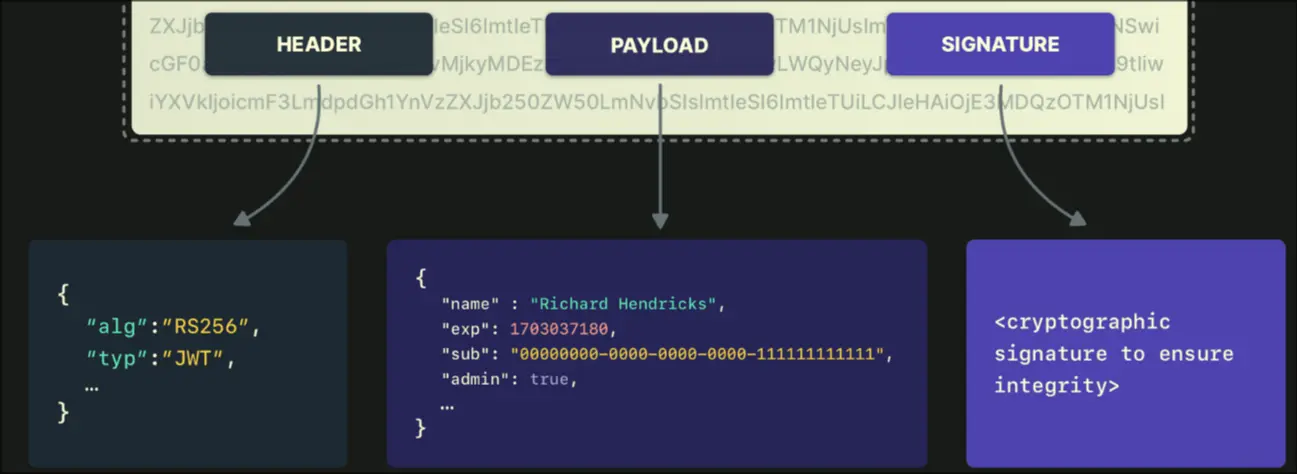 JWT claims can be passed around as identification to bypass authentication by identity providers or service providers.
- Cant be revoked
Structure
Header
- alg: the hashing algorithm
- typ: the JWT type
Payload
Claims (User Data)
- sub: user identifier
- exp: token expirt
- iat: when token was created (issued at)
- aud: indended recipient API, service
- iss: who issued the token
Token Lifecycle
Since JWT does not update session for client, the client must frequently get new tokens. It has an identity token (refresh token) and access token.
Access Tokens
- Used for API requests, short expiry limits exposure (15mins)
- Usually, you define role, perms, everything required
- When access token used up, call the refresh endpoint which returns a new access token
Refresh Tokens
- Used to get access to new tokens, rotated on each use (7 days)
- Contains the sub, expirty date, issued at, etc
JWT Common Pitfalls
Non-implemented security things in JWT:
- Missing exp claim
- Stored in Javascript Local Storage
- No refresh rotation, no new tokens are generated
- Not invalidated on logout